Total Pageviews

Saturday, 23 January 2016

The Fanboy Reawakens - a less than honest opinion

SPOILER ALERT. Wait, if you still haven't seen this movie, you're either at the wrong webpage or in dire need of reevaluating your priorities in life.


Enter the holy grail of geek culture, the space opera fantasy that, since ages immemorial (at least for 90s kids), mandated that every man, woman and child fit for society should hum the Imperial March in reverence to the likeness of Darth Vader upon sight, Star Wars. From indoctrinating the young to the idol worship of Stormtrooper figurines and LEGO Star Destroyers to establishing that emotional attachments to fictional characters are socially acceptable while homosexuality isn’t, these events that transpired a long time ago in a galaxy far, far away have defined the way we see the universe. That being said, Star Wars is not merely one of the world’s highest grossing franchises - it is a way of life.
After a train wreck of prequels that culminated in a redeeming finale that was not nearly sufficient to keep creator George Lucas from going into exile, the series’ fan base was segregated into two factions – the Dark Side loyalists whose emotions had been played with by his treachery, and the Light Side optimists who ruminated on his mistakes so hard, they brought Darth Plagueis back to life and elevated Jar Jar Binks to the status of Sith Lord. Nonetheless, with the announcement of the third trilogy and the passing of the baton to Mickey Mouse’s fun house and J. J. Abrams, the man who did rather well with that Sci-fi franchise that the uncultured often confuse with this one, millions of voices suddenly cried out in anticipation, and were suddenly screaming all over the internet as the hype train once again took the world by storm. Two-minute teasers sucked away hours of everyone’s time as the countdown to Christmas 2015 began, with the familiar scream of TIE Fighters tearing through the atmospheres of unnamed planets, backed by John Williams’ timeless score, sending shivers down the spines of grown men and women who struggled to contain their tears. YouTube’s storage capacity stood challenged by the innumerable hour-long analyses, debates and speculations born of the mere five minutes of material that had been released to the public. To a large section of the uninitiated, the fanfare served as a call to arms, with catch-up marathons keeping people up late so as to keep them apace with their more enlightened peers’ everyday conversations. Star Wars was back, and the world would not sleep in peace till their tickets for the opening day were in hand.


How to sell a teaser in 2 seconds
While those of us in India were inconvenienced by the higher popularity afforded by a pair of films with two hours of dance sequences and two minutes of plot development, our honorable brethren from the far west took great care to ensure that we walked into the theaters a week later than them with no more than the trailer to go by. When the day finally arrived, I donned the attire of Han Solo, abandoning the calm, jocular demeanor of the master smuggler in favor of uncontrolled excitement, a sentiment shared by her worshipfulness Princess Leia, seated beside me, as numerous advertisements and trailers streamed by unnoticed on the IMAX screen, the final test of patience before the conscious mind allowed the fantasy it had molded and twisted beyond reason over the course of a year to take proper form, nurtured by the senses alone.
Star Wars movies are a wholesome experience right from the start, with the 20th Century Fox fanfare giving way to the Lucasfilm banner halfway through, followed by the tense silence accompanying the phrase “A long time ago in a galaxy far, far away…”, the calm before the storm of trumpets heralding the march of the opening crawl to Williams’ legendary Main Theme - a potent cocktail of immeasurable grandeur that leaves longtime fans with eyes so watery they can hardly read the text as it ascends towards the stars. Disney could not, of course, replicate the first part of this sequence, but the experience remained unadulterated, and fulfilled its established duty of setting the tone for the odyssey that lay ahead.
The opening scene is one of the finest in the series, introducing the new Rebel Alliance, the Resistance's friendliest pilot, Poe Dameron, his trusty droid BB-8, the Stormtroopers of the post-Galactic Empire Imperial faction, the First Order, who display a remarkable capability to actually hit their targets, and the chief antagonist of the film, and hopefully the rest of the trilogy, Kylo Ren, a seemingly powerful Dark Jedi who demonstrates his frightening ability to stop blaster projectiles midair. We are subsequently introduced to Finn, an exemplary Stormtrooper with a conscience, whose primary purpose is to ensure that no Bothans die while the Resistance plays covert ops. Dameron affirms his flying prowess by adeptly piloting a TIE fighter as Finn takes over its firepower, igniting a passionate bromance that soon goes down in flames just above Jakku, leaving a forlorn Finn to cross the unforgiving dunes by himself.
Writer Lawrence Kasdan proceeds to fulfill the New Hope in the fresh trilogy by following the adventures of a droid with sensitive information sought by the enemy across a sandy planet, accompanied by a budding Jedi who eventually makes a hasty escape to space aboard the Millennium Falcon - a narrative that bears stark similarities to that of the first movie. It is, however, supplemented by dramatic visuals, the most powerful being protagonist Rey’s solitary ride across the sands of Jakku with a fallen Star Destroyer in the background, an ominous throwback to the events of the original trilogy. Abrams whets our appetites for the dogfights to come with an intense Falcon-TIE Fighter battle in a graveyard of Destroyers, ending in an incredible maneuver of the Falcon to align its damaged cannons with the single remaining Fighter, making its pilot, Captain Phasma, feel as weak as her character's development. The film, up to this point, provides an accurate view of its perfect pacing, which is more or less consistent throughout.


Super thug Wookiee face
The entrance of Han Solo and his Wookiee companion Chewbacca elicits a loud cheer from both those well aware of their presence in the movie and waiting for the right moment to proclaim either love or sycophancy, and the genuine folk who hadn’t seen the trailer beforehand, the latter group being merely hypothetical. While his age and his newfound faith in the Force could have made him more mature and boring, Han proved to be the same old sly scoundrel from the original trilogy, attempting to appease the mercenaries, whose kind is still after his head, with his signature sweet talk. The frantic chase that ensues has Abrams written all over it, but is nothing special enough to elaborate on.
The film's excellent choice of set locations is made prominent as the Millennium Falcon descends onto the lush green paradise of Takodana. Maz Kanata's fortress of a cantina has all the charm of a wartime keep, with a spectrum of flags from across the galaxy greeting visitors as they enter. While Kanata herself plays a role very typical of hero-centric plots, she helps reveal Finn's need to escape the terror of the First Order, and aggravates Rey's panic at the visions of Luke Skywalker's slaughtered Jedi Order and their assailants, the Knights of Ren. Their attempts to flee are cut short by the horrific obliteration of the New Republic and its neighboring worlds at the hands of the offspring of the Death Star and a planet, the Starkiller base. The subsequent convergence of the First Order and the Resistance at Kanata's doorstep begins the most exhilarating dogfight in the series so far, opening with a beautiful shot of TIE fighters arriving at the scene to the backdrop of the sunset and several views of the front line of Resistance X-wings racing towards the waterfront. The IMAX 3D experience proves to be utterly spellbinding as I take in the epic tracking shot of Poe Dameron's X-wing hunting down a fleet of unfortunate TIE fighters as Finn scrambles about the battlefield rejoicing at the glorious return of his brother-in-arms - the very moment I couldn't stop thinking about even as I stood in line to watch the movie for the second time a few weeks later.


Now, that's a damn good cameraman!
Nostalgia strikes back in the form of Princess-General Leia, who arrives with her Resistance fleet and greets Han, whose haunting sense of failure is betrayed by his eyes as first lost son and then estranged wife reappear after his many years of running away. While Leia is not given significant screen time, the chemistry between the iconic couple is heart-rending. With their romantic theme from the original trilogy playing softly in the background, time stands still for the small moment when their eyes first meet. Carrie Fisher perfectly embodies her character’s description as being “war-worn and somewhat sad”, bearing an expression that speaks of decades of hardship and a strict dedication to duty while giving a tiny hint of being tired of it all. C3PO’s cameo appearance doesn’t give him enough time to be his old comical self, and R2D2’s almost ridiculous “low-power mode” stretches to an unreasonable extent the notion that droids have feelings, elevating newbie BB-8 to the title of Most Entertaining Droid.


I'll try spinning, that's a good trick!
Without thoroughly debating the degree of realism observed by a universe in which stars can be absorbed by their orbiting “planets” and fired at solar systems in concentrated beams, sneaking into Starkiller’s atmosphere at warp speed was an incredible comeback stunt for the Falcon and her favorite pilot. The sensitive ground operation undertaken by Team Falcon is led by Finn’s sugar rush, mediated at times by Han’s timely sarcasm. Captain Phasma’s incompetence is exploited yet again by her least favorite subordinate as she is forced to lower the base’s defenses. Following the X-wings diving in formation to take out the vulnerable stronghold, we are once again pulled into the action and reminded that 3D effects aren’t always superfluous.
The change in atmosphere as Han catches a second glimpse of Ren is palpable. Abandoning his immediate objective in a seemingly final attempt to win a more personal battle, Han cries out to his son in a tone that leaves the audience frozen, muttering “Don’t do it” again and again as the beloved smuggler’s inevitable fate, as envisioned by Harrison Ford himself, unfolds before our eyes. While it is well known that the Dark Side brings out the worst in people, the act about to be committed seems unreal – Han Solo, who survived being encased in frigid carbonite, shone like a true veteran in the Battles of Yavin and Endor and stole a great number of the original trilogy’s many memorable moments, thereafter attaining legendary status in Star Wars lore, couldn’t possibly die, right? Even resigning to the obvious outcome of the situation at hand and how it makes perfect sense in the larger scheme of things does nothing to quell the outburst of emotion as Ren ignites his savage saber to impale Han, who tenderly touches his son’s face before becoming one with the Force. Leia is struck by the same pang of sorrow that Yoda was forced to endure as Order 66 was being carried out to destroy the Jedi Order of the Republic. A haze of uneasiness hangs over the gathering, threatening to persist through the rest of the film.


Bring our souls back. :'(
Star Wars has always explored its central theme of the conflict between the Light and the Dark through Lightsaber duels, subduing the chaos of the surrounding war in favor of a more intimate contest of skill and willpower between the main characters. The original trilogy’s heavily plot-driven and psychological trials and the prequels’ beautifully choreographed, operatic showdowns (yes, they’re awesome; haters, go away) have served as the series’ most defining moments. The Force Awakens does justice to this legacy, upholding the quality of swordplay advocated by the prequels while employing the OT’s narrative approach, thus providing an opportunity for the combatants to bare their personalities for a thorough analysis.
Ren opens the attack with a sudden outburst of force power, rendering Rey unconscious as he singles out the traitor to his cause, his crudely crafted lightsaber arcing violently like the flood of emotions set loose by his recent patricide. At this point, we have been completely convinced of the sheer extent of evil hidden beneath his innocent facade, proved once and for all by the execution of the deed that even Darth Vader couldn’t bring himself to see to completion. The savagery with which he waves his saber is indicative of his lack of training and of the raw fear and anger that had driven him to the Dark Side. His short attacks are separated by asides with him beating on his bowcaster wound, trying to keep the acute pain from impeding his vengeance. Han’s cold blooded murder at the hands of his own son instills in Finn the desire to fight the evils of the First Order, and he picks up Luke’s lightsaber as Ren charges at him, but his resolve proves too weak against the Dark Jedi’s unquenchable thirst for blood.
As Rey pulls the fallen lightsaber away from Ren, his eyes seem to recount her capture: how her initial fear was drowned out by the revelation that she could keep him, a conditioned Force user, at bay while perfectly reading his thoughts, eventually leading to her escape by means of a Jedi mind trick; her growing faith in her abilities had been feeding off of his failure. It’s as if they were the perfect descendants of Anakin Skywalker, with him inheriting his temperament and her his prodigal force sensitivity (not to say that I’m sure Rey is Luke’s daughter). Rey takes on a defensive stance as she is pushed towards a landslide caused by the base’s collapse, when Ren offers her a chance to submit to his tutelage and unleash her potential in the Dark Side of the Force. That brings us to a small bad part – the utterly cheesy manner in which Rey realizes that the Force can help her fight back, being conveniently reminded of its omnipresence by the sound of its name. It is, indeed, rather unfortunate that Ren was subsequently defeated by a fledgling with such ease, but he cannot be held responsible; what burns is that every time I watch this movie again, I will have to relive this pivotal moment that almost seems to pay homage to Lucas’s abysmal dialogue writing. All bitterness aside, Rey’s innate skill is nothing strange to the Star Wars universe (refer to “Now, this is podracing!”), and the circumstances make it reasonable for her to have the upper hand over Ren, who manages to put on an impressive show in spite of his less than healthy physical and mental states at the time. Their next encounter is definitely worth looking forward to.


We will watch your careers with great interest!
Rey’s first meeting with Leia is suspiciously intimate, adding to the growing dilemma of her parentage. Meanwhile, R2 reverts to “high power” for some unexplained reason, helping BB-8 reveal Luke Skywalker’s refined taste in exile destinations, something his late master Yoda could have certainly benefitted from in retirement. The flight of steps that takes Rey to her new master seems like a tribute to the martial arts in pop culture that gave rise to the ways of the Lightsaber. Luke, now a world-weary Jedi Master, certainly looks the part, silently conveying all he needs to say as his apprentice-to-be holds out the lightsaber that he could have sworn had fallen deep into the gaseous bowels of Cloud City. As their eyes meet, he understands what must be done, and the mellow background score transitions to the epic Force theme for one final moment of glory before the curtains fall. We choose to remain seated through the credits, allowing Williams’ magical soundtrack to wash over us as we slowly gather ourselves for the return to normal life.
With Episode VIII within sight, there comes the fervent hope that we shall never have to witness the destruction of yet another Death Star. The biggest expectation from the sequel is a significant focus on the training of the arch-nemeses Ren and Rey in parallel, thus forging a rivalry the likes of which cinema has never seen before. Ren is, however, the more interesting of the two simply because villains seldom debut as fledglings, and the potential that lies in a Dark Side version of The Empire Strikes Back is immense. On Rey’s end, the big reveal about her lineage will be disappointing if it makes her story look very similar to that of Luke and Leia, especially after all the rampant fan theories bringing Obi-wan and even Palpatine into the picture. Also, given Finn’s origins, more encounters with the First Order seem inevitable, particularly a climactic confrontation with General Hux, whose evident rivalry with Ren is also worth developing. Two very significant players in the upcoming movie had, however, barely made an appearance in TFA.
Supreme Leader Snoke, puppeteer of the First Order and master to Kylo Ren and his “Knights”, is more or less left in the dark, as Darth Sidious was before him, and this raises many questions regarding his connection to the Sith, if any, his activity in the era of the Galactic Empire and, finally, how tall he really is. While his position in the grand scheme of things calls for a generous backstory in Episode VIII, it would be nice if he remained a supporting villain unlike the Emperor, nurturing his apprentice for the role that could serve as inspiration to the fallen Jedi of Disney’s universe, placing him even above Vader. It would be delightful to see Snoke fall to Kylo Ren as the young Jedi attains mastery in the Dark Side.


Tired to death of family surprises
Luke Skywalker, on the other hand, has other expectations to fulfill – from the New Jedi Order to his nephew’s fall and why he chose to leave a jigsaw puzzle leading to him in the first place, there’s plenty to shed light on. Given his extreme reaction to the fate of his Padawans, his state of mind is worth exploring, particularly what would happen if he came face to face with Ren again. And it goes without saying that he knows what fate befell Han; a stream of tears upon seeing him reunite with Leia would be most welcome. And we all know who held Poe Dameron’s title in the days of the Empire. Thoughts of an aerial assault on the First Order led by the Falcon and two proficiently piloted X-wings, matching or even outdoing the standards set by Abrams, add to the sheer potential of the experience to come.


While the vast canon of the Expanded Universe has been cast aside by Disney, it is evident that Star Wars is headed in an interesting direction, with Rogue One and the Han Solo anthology filling the long wait for the remainder of the new trilogy. Rian Johnson will now proceed to work in an environment constantly abuzz with talk of the franchise, hopefully improving where Abrams fell short, namely the repetitive, predictable plot, and building on every other aspect. Having documented this affair in the present tense after almost a month of its occurrence, I am still hungover from the excitement at the return of Star Wars, which is evident from the rather redundant list of suggestions YouTube offers me nowadays. Lucasfilm has set its clock ticking, and before long, the world will once again turn oblivious to the mundanity of everything else Hollywood has to offer.

Sunday, 17 May 2015

Velvet, but Far from Soft

Spoiler-free Content


Here's a film that is as refreshingly different from its contemporaries as Bollywood allows one to be. Directed by Anurag Kashyap, Bombay Velvet is the crowning of his artistic vision, his magnum opus, a film that's been in the works for close to a decade and also the one on which he's bet the biggest in terms of scale and budget.

The film's first quarter is probably its worst, but also its most necessary. The plot is driven forward a little too hurriedly and the film falls prey to a couple of Bollywood's favorite tropes -- the immigrant mother who solicits herself to feed her son, and the prodigy who was sexually abused as a child and escapes to the city after ridding herself of her captor only to be taken advantage of again. But these developments, one quickly following another, set the canvas for the rest of the film to then fill out. Rosie's arc in particular informs us on why her character later seems to find little joy in singing. And while many have been quick to blame Anushka Sharma for Rosie's lack of pizzazz on stage, I thought this was deliberate on Anushka's part and definitely not something she failed to pull off. The fact that Rosie is easily and often distracted during her performances reiterates this.

Many have noted Scorsese's seminal works as the film's inspirations, but perhaps a better comparison would be Baz Luhrrman's Gatsby. Both are a commentary on the social classes that money or lack thereof creates, and depict the familiar struggle between old money and new. And both will probably be remembered more for their rich visuals than for their story.

Ranbir Kapoor effectively captures the angst and hunger of a street rat, constantly struggling to rise above what society deems him worthy of. There are decent performances from the rest of the supporting cast as well, but nothing that they're likely to showcase as the highlight of their career. With one exception.
The absolute revelation of Bombay Velvet is Karan Johar. In him, Kashyap finds someone who is not only perfect for the part of the genteel Kaizad Khambatta but is also a blue-blooded Bombay thorough-bred, who understands the city's elite like few others. Be it while commenting on the sartorial choices of Johnny and Rosie or while sneaking out of the room only to let himself giggle freely at Johnny's interpretation of tender, Johar plays his character with glitzy aplomb.

Amit Trivedi's score feels completely right for the film, and sets the tone beautifully throughout. Fifi, another wonderful remix by Mikey McCleary, certainly warrants a few more listens after you've seen the movie. The film's most euphoric moment for me was when Johnny comes out all Tommy guns blazing, with Trivedi's rendition of Whiplash blaring in the background.

All in all, Bombay Velvet is a momentous film for Bollywood. While not as visceral as some of Kashyap's earlier work, Velvet sets a benchmark for period dramas and neat, understated acting. This is definitely not a film that I would ever regret watching in the theater, and one that you should at least watch for yourself before deciding whether you like it or not.

A word of caution

In the off-chance that you're pumped about watching the movie after reading my review, here's a disclaimer -- going into a movie like this expecting to have your mind blown is probably the quickest way to ruin it for yourself.

Even as I write this, Bombay Velvet has been labeled disappointing by fans and critics alike for a reason best explained here - On Bombay Velvet: How internet is killing the movie and the curse of being Anurag Kashyap. I can understand that the film isn't for everyone but an audience that doesn't let cinema like this breathe and reap at least some of what it has sown in terms of expenditures, later has little right to complain about the ennui brought about by Bollywood's usual trite fare.

So, go in with qualified expectations, sit tight as the plot unfurls and then let yourself be wooed by the cinematic experience that the film is. This is certainly not a film to be missed altogether or seen through torrents.

Spoiler-filled observations

  • I loved how real Johnny's reaction to Rosie's photo was. The photo was far from scandalous, and I was glad that Johnny too saw it as such. It would have been a letdown if the film's climax hinged on him being outraged by something so clearly vanilla.
  • Once it was established that Johnny's skirmishes in the steel cage are to satisfy his masochistic tendencies, Kashyap could have skipped one bout or two, especially since they're all between the same two fighters.
  • Why Rosie comes back to attend her pseudo-funeral is beyond me.
  • The scene where Khambatta shoots Rosie was gold.
  • The intended meta scene was where Glitz refers to Khambatta as a fruitcake. But KJo's presence has a slightly detrimental effect on the denouement of the film as him gasping while Johnny "stabs" him makes it look as though the two are engaging in some coitus, albeit it from the front.
  • While the commissioner shooting Johnny in the end and saving Mayor Quizmaster's reputation in the process was probably a natural culmination for the film, I couldn't help but wish for a happier ending. But meh, this is a minor gripe courtesy the romantic in me.

Saturday, 8 November 2014

Of Space, Time and Pizza


[Spoilers ahead]
Interstellar is certainly brave if nothing else. Spanning multiple galaxies and time zones (I know this term is probably incorrect, you geeks), the movie is a beautiful experience for at least the first 2 hours of its run-time.

The Good


  • TARS – This robot, thanks to his dry humor, was at once amiable and certainly held his own in a film with a solid cast all around. Special mention to TARS' form which was functional and unlike anything I have seen before, yet aesthetically pleasing.
  • Time Dilation – If there was one scientific concept whose use the movie absolutely nailed, it was this! Key to the the plot, time dilation served to heighten the drama and elicit gut-wrenching emotion on several occasions. We feel Cooper's joy turn to pain as he watches how his son has been sending out hopeful messages out into space all these years.
  • Matt Damon's entry – I and, judging by the collective gasps in the theater, most people watching had no idea that Damon was in the film. There was good drama on both the planets that Cooper and Brand visit, but Mann's world really took the cake. The half an hour or so that he was in the film were edge-of-the-seat stuff, and Damon was the perfect choice to play the Mannipulative pioneer. BTW, when Damon comes out of cryosleep, did anyone else mistake him for Philip Seymour Hoffman?
  • Despite the terrible pacing that leads up to this scene, I loved Cooper's reunion with Murph. Her line about knowing Cooper would be back because of his promise as a father is a genuinely sweet moment and reassurance that Interstellar is a film with its heart in the right place.
  • Visuals and acting, obviously. The film was also peppered with some nice dialogue and crisp, funny one-liners throughout.

The Bad


  • For weeks, we heard about how the visuals in the movie aren't typical artistic fare but rather the results of complex, scientific calculations that took hours of computing time to render; we read The Physics Refresher You Need To Read To Understand 'Interstellar', and saw Kip Thorne tell us about research papers that will be written based on everything that was learnt in the development of this magnum opus. And while that is commendable in terms of breaking new ground, for an average moviegoer like me, it really does not matter. Gargantua, for all of its scientific accuracy, is at the end of the day, just a black hole that is supposed to suck everything in its vicinity into its unforgiving, gluttonous self. Why this is bad is at several times, it felt as though the film wanted me to care about its amazing complexity rather than its story, but I didn't.
  • The first couple of minutes that Cooper, after passing through Gargantua's wormhole, spends in the limbo(?) overlooking his daughter's bookshelf were amazing! But that feeling of "OMG! It was him all along" was quickly replaced by wariness as Cooper passes on complex, esoteric information in Morse before the film fast forwards to Murph's Eureka moment. For a film that had real potential to generate an emotional reaction, Interstellar let its magic be diluted by its half-baked scientific expositions and hurried pace in the last quarter.
  • For all its technological brilliance, Cooperspace (or whatever that futuristic NASA colony orbiting Saturn was called) seems to have an improbably lax security system, judging by how easily Cooper sauntered into wherever the spaceships are kept and escaped in one of them. I mean c'mon man! Even stealing a car from a parking lot has to be more difficult than that. Just because my brain was a little tired by then doesn't mean you try to slip that past me.
  • The all conquering power of love – This theory, that love guides us in a manner that transcends space and time, could have been beautiful had it been made more tacit, but in the way it was oft-repeated by its characters, the message seemed rather forced and unintuitive.

The Incomprehensible


  • A lot of the dialogue in the beginning was difficult to understand. McConaughey's slick, Texan drawl is easy on the ears but more than a little tedious to process at times. Kudos to Jessica Chastain for deciphering not just Cooper's codes but also what Michael Caine was saying on his deathbed.

In conclusion, I would like to say that for me, the film was like having a large Pizza all by myself, all at once – there is enough good in there while I'm eating it, but when I'm done, I feel more stuffed and tired than happy and content. Metaphors aside, Interstellar is a movie that you may or may not love but definitely one that you should watch.

Sunday, 19 October 2014

Haider: A second opinion

I shared popcorn with a friend during the second half. I finished it very quickly so I didn't have to hear myself chewing.

Spoiler alert!

Cold and brutally unforgiving, Haider was a very welcome interpretation of Shakespeare's powerful tragedy, Hamlet. The third of his Shakespeare influenced epics; Vishal Bharadwaj once again plunges into deep character play and wonderful storytelling, although the editing and continuity of the movie were surprisingly wanting. Let's break it down, shall we?

The movie was, of course, set in a beautiful scenic place blanketed by crispy white snow and yet, the air was choked with blood and pain. There were a couple of interesting Birdseye shots, rolling over lush green hills and sparkling waters. I really liked the house. Not many houses can seem so charming after they've been blown up. Every scene had a very befitting landscape to support it. 

STORY

Here's why I really loved it. I read condensed version of Hamlet a week or two before the movie, and the thing about Shakespeare is that he makes everything VERY dramatic. Every dialogue is heavy with emotion, every scene ripe with melodrama. Normally, Bollywood would be all over that shit. Heck, if Karan Johar remade a Shakespeare classic, it would be a 6 hour boo-hoo fest. But not this time. VB trimmed the fat. He made the adaptation SO brutally straightforward, so relentlessly brash and tight, that I felt a hot slap to my face. The story is different. The people who I thought would die, did not. The people I hoped would die, did. 

"Feel my rapier scoundrel! Wait, actually, this big rock will do"

The first half was slow, yes, but the second was at cutthroat pace in comparison and we were teetering off the edge of our seats in no time. Based on the length of the film I have a feeling it was meant to be a sort of commentary on Haider’s life after the tragedy. The first half did its best to elucidate Haider’s search for his father and the several places that it carried him to, but there was too much other stuff going on. In this respect, the story wasn’t all too strong, especially since he comes straight home to get his mother to eat.
Another welcome interpretation of the story was Irfan Khan’s character. While the original Hamlet involved the ghost of his late father whispering vengeance into his ear, VB made a supercool cellmate for Haider’s father who becomes the film’s game changer. The only hint of the supernatural is in a short and beautifully rendered dream sequence which was more than sufficient.

 VB:2
 Shakespeare: 0

Bismil was amazing. I’m not a fan of mid-movie Bollywood numbers but this song really tied things together. Very interesting camera angles and the slowly changing expressions on the actors faces were perfect. Kudos to Kaykay Menon in the ending of this scene.

And of course I was pleasantly surprised that “To be or not to be” was successfully converted into a kickass Hindi monologue. Although the “Salman, to go or not to go” line almost made me throw my shoe at the screen. I had a hard time keeping up with the beautifully scripted Hindi, but I definitely noted some very hard hitting dialogues. And of course I was very happy with the graveyard scene. But Shraddha Kapoor's English was NOT funny. It was much better to see Tabu teaching it at her school rather than a really bad post-love-scene monologue. 

"I louu you 4eva"


Hamlet does have some smart political commentary which was missing in Haider, but perhaps I was too distracted by all the blood.

And the ending, oh god, the ending. I was on my feet before the movie was over. So the uncle was supposed to die. NO. Haider decided to go Arya Stark on his ass and leave him bleeding. I applaud VB for this unforgiving tactic that really sealed the deal for me, although I really wish the movie had culminated in an epic dialogue. The movie was full of them! Instead he chose to settle with a cheap and weak fade to black. Speaking of which…

EDITING. Awful. The primary reason why this movie was slow was because there was NO continuity. Scenes started and ended with dialogues that were awkwardly out of place and everything was fading to black! Shoddy work I must say. There was also this tiny shot of the house as it took the first bomb where a really bad CGI corpse was dangling from the roof for just a second. My guess is that it was cut short and retained because it was probably expensive. Either way, it was rather off-putting. The movie deserved much better.

CHARACTERS

Shahid Kapoor wins. His eyes will haunt my dreams for the weeks to come. He’s done an incredible job and his facial hair-madness-face was vital to the character. I would’ve preferred a slow descent into madness rather than an abrupt visit to the barber but the movie was long enough as it is. I especially liked how he continued to polish his dead father’s shoes in the ruins of his home. Very classy.  His dialogues were full of venom and icy hatred. He delivered his lines with perfection and really struck a chord with his brilliant acting.

"How I felt after R...Rajkumar"


Tabu was as elegant and beautiful as always. Her relationship with Haider (creepy) was a looming thought through the length of the movie. She played the perfect doting, motherly infidel and was exceptionally convincing during the Bismil sequence. Although at the end, her suicide, while seemingly abrupt, was sort of welcome. It almost felt like it was just meant to happen. On a side note, the explosion wasn’t nearly as big as it should’ve been.

Kaykay Menon did a great job in making people hate him while still putting in his best sympathy face. I must admit I expected much more from him during the prayer scene when he’s supposed to be repenting for his sins. But his reaction to Bismil was all I needed. The movie may have ended rather badly for him but his final cry of anguish was echoing in my ears for a while. He really went out on a limb. Or two. <pat self on back>

Shraddha Kapoor has a really sexy back. Yeah that’s about it.

The Salman’s, ugh. But there was very little of them so it didn’t entirely throw me off. They actually turned out to be very interesting characters, and to be fair, they died in a very brutal way. I’m sold.

Haider’s dad was pretty good. The man had an air of righteousness about him, and he made a very convincing jailbird poet. There was something about his quest for vengeance that was so noble and true that it almost made his thirst for blood seem permissible.  

Irfan Khan’s cameo was very cool, and as I said before, much more welcome than some ethereal ghost of Haider’s father. Not like he had much to do, but his pronounced limp really added to the charm. Also, what a cool name! “Roohdaar”

I really couldn’t care less about Shraddha Kapoor’s brother. I just waited for him to die. It was like he was never there to begin with.

Small shout out to the supercool graveyard guys and the way they recite that poem before planting a slug in that guy’s head. Damn it VB, you really get me.

So the characters were all great, but I felt they could’ve really used a little more depth. Haider was fine and all but the story would’ve really benefited from a little more on Tabu’s fight with her own guilt and Kaykay Menon’s need for redemption.
All in all, it was a very uplifting movie with beautiful dialogue, exceptional acting and a very good perspective on Shakespearean drama. Welcome back VB; I shall be downloading Kaminey very soon.

4.5/5 for being so awesome  


Saturday, 11 October 2014

This Will Make Your Blood Freeze

Disclaimer: I practically know nothing about Hamlet or the actual situation in Kashmir circa 1995. This review contains spoilers.

Seductively dark and refreshingly edgy, Haider will definitely evoke sharp reactions from whoever watches it. The film itself is nuanced in its portrayal of sensitive topics; taking sides and drawing conclusions, it seems, is left to the viewers.

To watch or not to watch? That is the question
The movie opens in 1995 Kashmir with a militant being brought to Dr. Hilal Meer's home for a surgery. Alarmed by who her husband is treating, Ghazala (Tabu) questions his loyalty and in doing so, asks the audience to ponder over whether people should just go about doing their duty without worrying about its consequences. The ingenuous doctor makes his allegiance clear as he responds to her accusation by saying that the only side he is on is that of life. The army/police however believe otherwise, and on being tipped off about the location of the militant, smoke the doctor's home with a bazooka and make the doctor "disappear" for being an accomplice to militants.

Enter Haider (Shahid Kapoor). Distraught at seeing his dilapidated home, Haider goes to seek comfort in his mother (Ghazala) but is shocked to see her in what he deems to be a compromising state with her brother-in-law Khurram (Kay Kay Menon). Haider struggles desperately to find his father but without any reward. In the meantime, both Ghazala and Khurram explain themselves to Haider and assuage him for the moment. Flashbacks offer us insights into Haider's relationship with his parents and raise a few eyebrows vis-a-vis his relationship with his mother. Back in 1995, Haider chastises Ghazala for regularly using emotional blackmail to get him to do what she wanted, pointing back to how she sent him away from Kashmir and consequently from his father. Ghazala's angst, as she is unfairly blamed by her son, is palpable and reminiscent of another famous fictional mother - Carmela Soprano, reflecting on her travails with Meadow.

Hope for Haider arrives in the form of the sibylline Roohdaar (Irrfan Khan) who reaches out with a message from the doctor. Subsequently, two contrasting versions of what happened to Haider's father are laid out. Here, the film is at its strongest, as both Haider and the audience are apprehensive about who to believe - Roohdaar's separatist agenda, and Khurram's love for Ghazala provide sufficient reason to doubt both tales. All doubts are vanquished for Haider however, when Khurram decides to marry Ghazala. For me, the film's quintessential moment of chutzpah was when Khurram, after having slept with Ghazala the previous night, addresses her in the morning as Bhabhijaan.

Elsewhere, "Pruncess" Arshi is almost a seraphic presence in Haider's life as she first saves, then helps and later, calms him.
"You remind me of my mother"
Shraddha Kapoor's beautiful bare back and goofy yet cute dance moves notwithstanding, the song could have easily been replaced with a shorter love scene that conveyed the same message. The film faltered in pace a little here but it promptly got back on track with "Bismil".

Subsequently the film marches along confidently as each character does what they believe they must to protect or avenge their loved ones. The deaths of Arshi and her brother drive home the point that in every conflict, it is invariably innocents who get caught in the crossfire.

  • Characters - Everyone in the film is right according to their personal code of ethics, and their enmity arises and is aggravated by the situation that they find themselves in. Haider's mania even raises doubts about whether his hate for Khurram is driven solely by the need to avenge his father, or also by jealousy at seeing him with Ghazala, as the film hints at the Oedipus Complex. Khurram, for all his shortcomings, redeemed himself in my book when he ran towards and not away from Ghazala on realizing she was going to blow herself up. A proverbial doff-of-the-hat or rather, jiggle-of-the-belt is due for the three Salmans for providing some welcome comic relief.
  • Acting - Top notch! Tabu probably plays the movie's most nuanced character as she constantly tries to keep her world from falling apart, and she is brilliant in all her scenes. Shahid is outright scary post-interval. His deranged soliloquies make for some of the film's most edgy scenes. Irrfan Khan once again excels in his eccentricities and keeps you wanting more. Kay Kay Menon and Shraddha Kapoor too slipped into their characters with ease. Kudos to Tabu and Shraddha Kapoor for nailing that funny English accent if at all that is how it is (or used to be) spoken in Kashmir.
  • Cinematography and Direction - Kashmir provides a hauntingly beautiful backdrop to all the drama and bloodshed that unfolds and stains its pure white snow. A blood-covered boy waking up in the middle of a truck full of corpses and revelling in his freedom after escaping was a surprisingly good scene. The "Bismil" martial arts routine is extremely well-choreographed and steadily builds up the tension with Gulzar's lyrics eloquently dramatizing Haider's account of events. The scenes with the Graveyard Guys give you goosebumps and their version of "Aao na" in the film is every bit as awesome as Vishal Dadlani's version in the trailer.

Haider deserves accolades for steering clear of the temptation to be preachy despite the material providing ample opportunity to do so. Its strongest rhetoric perhaps comes against revenge as the film released on Gandhi Jayanti aptly echoes the aphorism that "an eye for an eye will only make the world go blind."

So just watch it, there is no question.

Monday, 26 May 2014

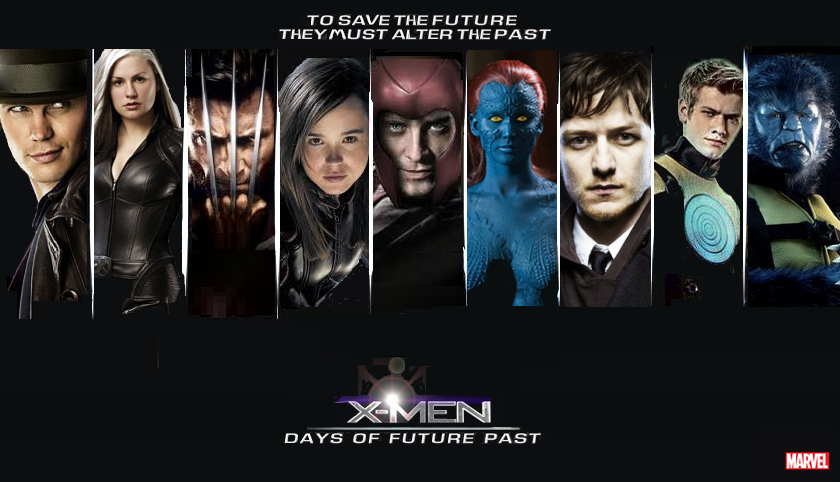
X-Men - Days of Future Past: Screw you prequels!

This review contains NO spoilers, but only as far as I can tell. If reading this affects your movie watching experience negatively, its YOUR FAULT. 

Particularly strong opinions are written in caps.


Here's what I thinking when the trailers came out:


  • MARVEL TIME TRAVEL. Let the multiverse shag begin.
  • Old X-men and young X-men together which means: Michael Fassbender-Ian Mckellen faceoff.
  • Back to Bryan Singer, so no cool Matthew Vaughn vibe.
  • Peter Dinklage. Nuff said.

Here's what I was thinking while walking out after the post-credit scene (which was not important):

  • Time travel concept was 'meh'
  • Half the cast didn't really have to be there. The posters were all a lie.
  • Bryan Singer is pretty cool too
  • How can you NOT have more Peter Dinklage?!!

So, honestly, I missed the first 5 minutes. Turns out they weren't important because its a flash forward to the last part of the movie (pretty cool). The remaining 2 hours and 5 minutes were very fulfilling, with plenty of fist throwing and mouth-covered gasping. The movie certainly did not fail to impress, in the sense that i left the place feeling pretty good. But let's break it down like I usually do:

The Cast


HUGE expectations on this one, but no delivery. As always with Bryan Singer movies, the whole plot just HAS to revolve around Wolverine. While Logan hogs the limelight with a fair share to to young Charles Xavier (James McAvoy) and young Eric Lensherr (Michael Fassbender), the cast of the old X-men movies pop in now and then for a quick dialogue. Halle Berry is back as Storm, looking as awesome as ever and manages a whopping 6 or 7 minutes of screen time. Peter Dinklage was blatantly misused and left no lasting impression on me except that he sounded like Tyrion in some scenes. James McAvoy and Michael Fassbender took centre stage and shook the building with a heated argument, which was as good as the cting would get in this movie. Jennifer Lawrence plays Mystique didn't really stand out all that much in spite of her VERY pivotal role in the plot . A lot of mutants were brought back from the original trilogy just to make small appearances that meant little. A couple of random new mutants are seen with pretty cool powers, including one with the ability to generate portals (cool but obvious ripoff). I was also mildy impressed with the likeness of the actor who played Nixon .

"There are no small roles, only small actors"

The Plot


The time travel aspect of the film was actually pretty simple. My bad for going with Donnie Darko expectations i guess. The story lines up with real life events with some weak links but seemed like it was designed purely for easter eggs, cool references and "Aha, I saw what you did there" instances. A moment arrives when all seems to go wrong and you would expect a rip in the time-space fabric or some intense shit, but its all over with a shake of the head. There were some very obvious hints to the prequels although they were nicely timed and some small, unimportant things only avid comic readers would get. The plot had a disappointingly straightforward flow. There were very few moments where the story cut back to the present, but there were quite a lot of intricate details which were indicative of the timeline and how the events are placed in relation to the preceding movies in what i would call a grand X-timeline spanning from First Class to present day. For example, Wolverine travels back to a time where his skeleton is not yet fused with Adamantium and also his run in with Stryker serves as an indicator of the time and the rippling effect of the changing past.The second half is riddled with small but very cool plot twists which brought a smile to everyone's faces. For this reason the plot resonates with the cool vibe of X-men: First Class rather than the trilogy. This laid back feel soon disappears as the plot becomes more intense and tapers off at a very gripping climax that leaves you at the edge of your seat with popcorn falling out of your mouth. There's a HUGE ending to this movie that I can't mention for spoiler reasons. However if you're curious, the title of the review is a bad clue.

A small mention; The promo ads on YouTube are damn cool. 
Also, no Stan Lee cameo on this one.

I can walk through walls. Oh also I've always held the secret to time travel.

The Graafix


This was one of the few movies where the 3D glasses are actually required. The movie had JUST the right amount of awesome CGI. Bolivar Trask's sentinels have sprung right out of the comic artwork in a beautiful flurry of liquid and steel. The best graphics, and the singular best scene was the slow motion sequence with Peter Maximoff (Quicksilver) who, in his small appearance delivers a couple of typical teen movie zingers before being at the center of this super-cool scene. GG Bryan Singer. Cerebro looks as awesome as ever and the Magneto scenes as well. The final fight scene was amazing and surprisingly brutal for a Marvel movie. All this was of course accompanied by a very fitting soundtrack. I was disappointed that they didn't bring back the epic Magneto theme. 


When the credits roll, you can definitely tell that the movie has the Bryan Singer signature all over it and maybe a bit of the Matthew Vaughn First Class swag. The movie wasn't as sleek and ruthless as First Class but was significantly better written than the trilogy. Despite the not so impressive time frame and the poorly exploited cast, X-Men: Days of Future Past makes for a really good watch. Watching it on the big screen is a good idea thanks to the amazing, yet humble visual effects. The story is great and lets you pat yourself on the back every time you pick out a clever pun. I'm going to give it a 3.5 out of 5 which, in hindsight seems a little harsh but very well deserved. 


Sunday, 5 January 2014

The Wolf of Wall Street: Howling in despair


Director: Martin Scorsese
Writers: Terence Winter, Jordan Belfort (book)
Cast: Leonardo DiCaprio, Jonah Hill, Margot Robbie, Rob Reiner, Matthew McConaughey


People who know me for the passionate Scorsese fan that I am would expect a shining review of this movie with nothing but praise and a perfect score. How I wish that was the case. Contrary to these expectations, I scrutinized the movie looking for genius but only ended up squinting at the chaos on screen.

The movie was a much awaited one with a very eye-catching trailer and a lot of expectations from the very successful Scorsese-DiCaprio duo. Eventually, donning the disguise of a “Dark Comedy”, Wolf of Wall Street gave the audience what they wanted: A drug driven laughter fest with a stellar cast putting on their best “Cerebral Palsy faces” for the camera as they pranced about the screen like underpaid circus clowns at a birthday party.

"Censors. Censors EVERYWHERE"

The movie was said to be based on the true story of Wall Street legend Jordan Belfort, his claim to fame and fortune in the stock market, and his subsequent brush with the law. Well, at least, that’s what the posters said. As the movie progresses, one becomes less and less convinced that these events haven’t been exaggerated and bloated to entertain the audience and possibly to embarrass the cast. In my experience of movies with a similar plot [1] , A middle-class protagonist makes big money through “not strictly legal” means, gets where he wants to before imploding in a flurry of drugs, women and the law. The movie was pretty much along this line but the important bits are killed by the apathetic narrative.

"So you wrote the screenplay on this thing??!"

The worst scenes:

The movie hit an absolute low when DiCaprio and Hill get into a drug-riddled tussle which drags on painfully for way too long until Hill starts choking on some food. Seeing his friend dying, DiCaprio gets inspired by the TV as it shows Popeye downing a can of spinach. So he does the same; except with a vial of cocaine down his nose. (Hang self with rope). The few others were a horribly long slow motion shot of Jonah Hill attacking DiCaprio from the back and one where Hill openly stimulates himself in the middle of a party. FULL RETARD.

Barely supported by the terrible story (even if it is a true one), the movie thrives on comedy and eye candy. I walked into the theatre thinking I’d be missing out on some good scenes because of the Censor[2]. In the second half I was thanking the stars that they weren't there. I walked in for something along the lines of The Aviator and walked out after watching a teen comedy.

The general opinion was that Leonardo DiCaprio acted brilliantly, and I agree; but his job was far too easy since all he had to do was be angry, high and mostly retarded. Fueled by a variety of drugs and possibly an annoying itch in his pants, DiCaprio goes all out in his attempts to inspire his staff by screaming into a mic. This didn't really strike a note with me after the many inspirational speeches that have graced the Hollywood screen[3]. I've never liked Jonah Hill and he was pissing me off through the entire movie with his ridiculous antics and below par acting. His work in Moneyball is the one thing I can give him credit for. Matthew McConaughey had a surprisingly short role in the movie, but in 7 minutes of screen time, he set up the Wall Street feel beautifully with his affable charm and chest-beating, surfer dude, coolness. The other characters were as insignificant as the extras in a bad mallu movie.

As the credits rolled, I read “Directed by Martin Scorsese”. I didn’t believe a word of it. The camera work was very ordinary and uninspiring. There were one or two scenes where I got a flicker of the Scorsese style but they were drowned in the whirling cesspool that was the plot. A few signature tracking shots through the crowd of employees caught my eye, but the one scene that put a smile on my face was that of DiCaprio sitting in the car after he crashed it, as his head began to bleed and the window wiper oscillated blankly, marking the end of his tryst with narcotics. Good stuff. The narrative in the background by DiCaprio was very reminiscent of Ray Liotta’s in GoodFellas although it was no match. So perhaps the Scorsese vibe was present after all. 

"Yeah i know it's crap, but just go with it!"


Now for the few things that kept me going. I liked the ending and the whole “sell me this pen” gimmick. The music was wonderfully apt and the narrative held the movie together. I also really love the Nachos at Cinepolis, City Centre. They've got different dips and sliced vegetables and everything! Oh and also, Margot Robbie: WOW

As the lights came on I was already thinking of how harsh I should be with the review, and this is as friendly as I could be. Wolf of Wall Street is worth a 360p download at best for two reasons: It sucks, and a big chunk of it is censored. Watch it for laughs. I wanted to compare it to other comedies and give it a fair score, but I've reconsidered. This was meant to be a pacey, financial drama with a feel good first half, amazing acting and top-notch cinematography. With these expectations in mind I cannot give it more than 1.5 out of 5. Fellow Scorsese followers: I feel your pain.

1: Refer "GoodFellas" by Martin Scorsese
2: Refer love scene from Scorsese's "The Departed" with Pink Floyd background music
3: Refer Alec Baldwin's awesome speech in "Glengarry Glen Ross"


Saturday, 28 December 2013

The Hobbit: The Desolation of Smaug (2013)


Director: Peter Jackson 
Writers: Fran Walsh, Philippa Boyens
Cast: Ian Mckellen, Martin Freeman, Richard Armitage, Orlando Bloom

The Desolation of Smaug, Peter Jackson’s 2nd instalment of the Hobbit series, takes us back into the ever familiar world of Middle Earth. Chronicling the journey of the dwarves, Gandalf (Ian McKellen) and Bilbo Baggins (Martin Freeman) the film portrays our protagonists making their way to the Lonely Mountain to retrieve the Arkenstone from the fiery dragon Smaug (Benedict Cumberbatch).

The Sequel:

Slightly shorter than last years’ An Unexpected Journey, this film is a lot more high-octane, foregoing much background story and picking up where the first film left off. We follow our protagonists journeying and making their way past skin-changers, giant spiders and mysterious hallucinogenic forests. 

Those familiar with the source material, may be slightly disappointed with seeming excesses and exaggerations, but they seem very forgivable as director Peter Jackson once again looks to create a spell binding universe and takes a few liberties that come with that. The dwarves march on, taking the help of Bard and eventually reach the Lonely Mountain.

Meanwhile, Gandalf is separated from the party and heads to the evil ruined city of Dol Guldur, where he encounters and is warned of rising evil powers, more of which we will see later (or earlier?). Bilbo and the dwarves eventually come face to face with the Smaug (surely an epitome of the possibilities of CGI) the fire breathing dragon.

The good stuff:

Sri: 

The strong points of the movie are the action sequences and stunning visuals.An intense encounter with elves and orcs at Mirkwood is truly one of the highlights of film, featuring some breath-taking choreography during the fight scenes. Made specifically with 3-D and iMax formats, it proves to be a visual delight, as are all of Jackson’s Middle Earth based films. All the locations are luscious and detailed, providing a vivid imagery and backdrop constantly during the course of the party’s journey. Some of the action sequences featuring Legolas (Orlando Bloom) are scintillating, and the rise of the evil Sauron in Dol Guldur is definitely a highlight.

Arora: 

The most enjoyable part of the film was undoubtedly the tense dialogue between Bilbo and Smaug within the Lonely Mountain, with Bilbo attempting to avoid getting eating by praising “his radiance”, Smaug, in a manner reminiscent of the messenger imp intercepted by Bartimaeus in Johnathan Stroud's “The Amulet of Samarkhand”, .while frantically searching for the Arkenstone in a sea of gold.

RS:

Peter Jackson brought back his characteristic wide tracking shots of the beautiful Middle Earth. Set in New Zealand, (the same place that gave us the stunning planet Pandora in Avatar) the landscape varies from breathtaking green canopies to the cavernous stone walls of Erebor. Not a single moment passes where the camera stays still as it pans, tracks and races through the scenes allowing for a beautiful perspective of each character. The flying and crashing barrels being thrown around everywhere were reminiscent of Gore Verbinski’s work in the second Pirates of the Caribbean movie. These flamboyant action sequences, while not Peter Jackson’s style, were very welcome although a few of them involved a little unrealistic CGI.

Wheee!


The not so good stuff:

Sri: 

One of the few let-downs of the film was probably the unwanted love triangle between the elves Legolas and Tauriel and the dwarf Kili. It felt out of place and rather forced, not really providing any real purpose or value to the overall narrative.

Arora: 

The most significant shortcoming is the unrivaled winner of retarded character numero uno, Tauriel the elf. Portrayed as a love-stricken, hasty and impulsive warrior, she'd probably fare better in a teenage apocalypse porno than as a daughter of Mirkwood. Of course, our beloved Legolas would disagree, seeking her approval for all the archery skill that they share.

The film was extremely conventional in its approach in comparison to Jackson's original trilogy, giving a lot of focus to action sequences, and less to dialogue and narrative, which is what one would expect from LoTR. Not to say that the adrenaline was a bad thing, but it really compromised the “epic” feel of the film. A lot of unnecessary, contemporary humour did serve to ruin the atmosphere, like the part where the dwarves enter Bard's home through the toilet.

RS: 

The one thing that really put me off even in the first movie was Kili and how he looks NOTHING like a dwarf as if it were an attempt to make a good looking Dwarf-Elf romance between him and Tauriel.

But dad! He's not like the other dwarves!


The cast:

Sri: 

While some people would concede that a beastly, intimidating dragon shouldn’t possess the ability to talk, Benedict Cumberbatch as Smaug manages to match up to the evil looks and snarls as he once again showcases his abilities as a superlative actor.

Arora: 

Martin Freeman has done a spectacular job in his portrayal of Bilbo Baggins. Although not the prime focus of the film, the ring's influence on him has not been entirely left out. Bilbo can be seen gradually accepting the ring as a means to power, and a solution to tricky situations, using it against spiders in the Mirkwood forest (where he begins to understand their speech which, according to LoTR lore, is a direct effect of using the ring), when escaping from the elves, and when confronting Smaug.
            
RS:  

Thorin was portrayed well by Richard Armitage and exudes the majestic Mountain king vibe. Legolas was again very well portrayed by Orlando Bloom and is probably the only non-pussy character he will ever play. The earlier Dwarf-hating character was very different compared to the Legolas-Gimli Bro-mance in the trilogy. 


Still a better role than Mycroft in Sherlock Holmes 2


The movie makes for a very entertaining roller coaster ride although it seems like it is aimed at a younger audience, compared to the much more mature LoTR trilogy. I think a good 3.5 on 5 does the sequel justice while we eagerly await the final part to come next christmas.